
How to Choose Between AC-Coupled and DC-Coupled Batteries
Last updated: 18 Mar 2026
Choosing the right solar battery setup can significantly impact the performance, cost, and efficiency of your home's solar power system.
When adding battery storage to a solar PV system, you'll typically choose between 2 configurations: AC-coupled or DC-coupled. Each option has different components, installation methods, and ideal use cases.
Let's break them down:
AC-Coupled Systems
In an AC-coupled system, the battery and the solar inverter operate independently. Your solar panels convert energy using a solar inverter, and a separate battery inverter is used to manage charging and discharging of your battery
Advantages:
- Easy retrofit – no need to replace your current solar inverter.
- Flexible placement – great for phased upgrades.
- Compatible with microinverter systems – often used in residential setups.
- Lower installation complexity if you're adding storage later on.
Best For:
Homeowners who already have a solar system installed and want to add battery storage without changing their existing inverter setup.
DC-Coupled (Hybrid Inverter) Systems
In a DC-coupled system, solar panels and the battery are connected to the same hybrid inverter. This means electricity is only converted once, from DC to AC, improving overall efficiency.
Advantages:
- Higher energy efficiency – fewer conversions mean less energy loss.
- All-in-one design – integrates solar and battery in a streamlined setup.
- Advanced energy management features – like time-of-use scheduling, peak shaving, and full self-consumption modes.
Best For:
New installations or major system overhauls where upgrading the inverter is part of the plan.
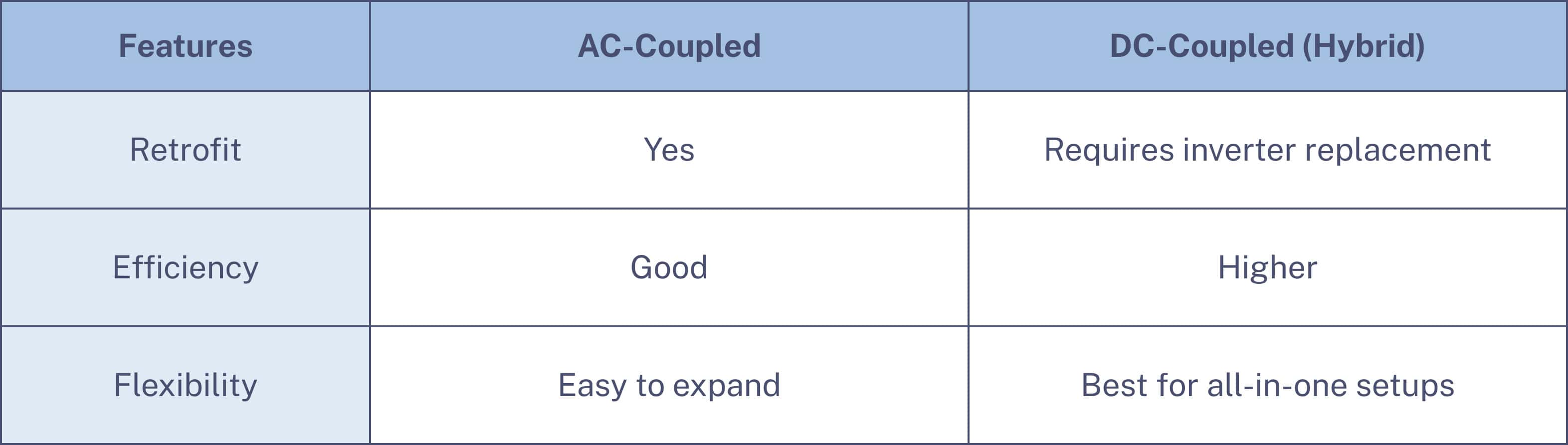
Let’s Compare: AC vs DC Coupling
Conclusion
Both AC and DC-coupled systems have their strengths – and the right one for you depends on your home, your existing setup, and your energy goals.
Not sure what fits your home best?
Speak to us at buySolar for a personalised recommendation based on your setup and future energy needs!